Banning Books: If a Book is Banned, it Might Mean You Should Read it

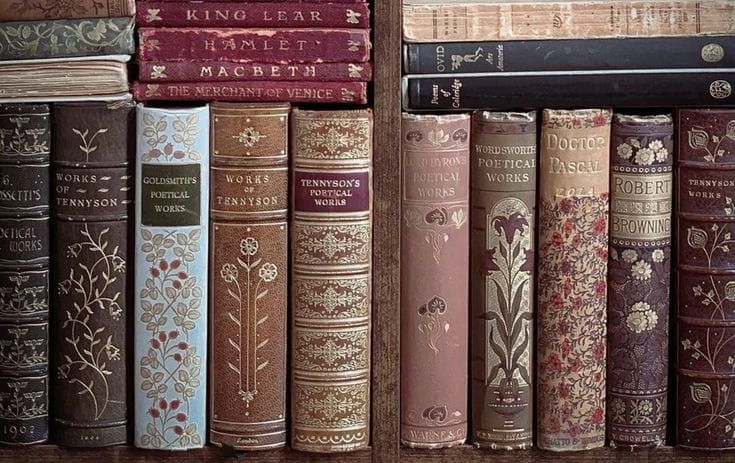
For a while, I've sat back on my couch while watching TV and wondered "Are book bans really necessary?" When I think about it, I realize a good book has never harmed me— but educated or entertained me instead. When reading, I notice how certain books allow me to empathize, expand my vocabulary or knowledge, helps make comprehension easier, as well as reducing stress. I also notice that I've never seen banning books positively affect anyones growth.
A common theme between "The Handmaid's Tale" or "The Hate U Give" could be oppression, hate speech as well as resistance to these things. Honestly, if these books didn't pose truth about such themes; they wouldn't be banned because they wouldn't threaten the principles of those in power. In "Book Banning Bans the Future: The Negative Effects of Book Banning Regarding High School Students," by Megan Palmer (Southern New Hampshire University.) Palmer states "books are banned not necessarily for their ideologies or content, but for the ideologies of those who have the power to ban." This highlights the issue that arises when a book is banned simply because it doesn't align with someone's ideals, it doesn't allow room for growth or progression. Palmer adds "Books are banned with the intent of purporting political, religious, or generational ideologies." This illustrates the idea that book banning tries to uphold an image of a certain belief system. To summarize these points, I'd say that you can't really ban a book without being feeling as if your specific ideals aren't threatened.
Book banning can affect authors, possibly making them fear publishing their book due to it being banned. This can make it hard for us to understand others perspectives or even feel understood by an authors perspective. In "Book Banning Negatively Affects Us and Should Be Stopped," by Racene J. Kent of Helena College. Kent claims that "If authors decide not to write a book because they fear it might be banned… then people all across the world will lose the chance to read about others like them or gain an understanding of others’ experiences." This is important because it shows that gaining perspective through books in necessary. Kent also states "Banning books also discourages authors from showing new and unique perspectives and sharing ideas for fear of censorship." This demonstrates how authors can feel hesitant about sharing their storys because of restriction. Ultimately, there are no positive affects of book banning for authors.
Classrooms and more specifically teachers, are also negatively affected by bans on books, because bans on books can make a structured curriculum collapse and overall does not benefit curriculums. In "Book Banning Bans the Future: The Negative Effects of Book Banning Regarding High School Students," by Megan Palmer of Southern New Hampshire University. Palmer states "When books are banned, unbanned, questioned and concerned, the footing of curriculum becomes shaky and unstable (Agee, 1994)." This proves that book bans negatively affect a teachers curriculum. In "Book Banning Bans the Future: The Negative Effects of Book Banning Regarding High School Students," by Megan Palmer of Southern New Hampshire University. Palmer pulls a quote from The Common Core State Standards (CCSS) for English Language Education (2010), which states "To become college and career ready, students must grapple with works of exceptional craft and thought whose range extends across genres, cultures, and centuries. Such works offer profound insights into the human condition and serve as models for students’ own thinking and writing. (p. 35)" as well as this quote from Freedman & Johnson, 2000, p. 357 “Too often teachers choose not to use certain books for fear that these texts will create controversies leading to confrontations with parents, the members of the wider community, or school administrator” This shows exactly how book bans contradict curriculum and cause teachers to self-censor. Given these points, book bans don't create a better curriculum and actually worsen it.
Book bans also have a societal impact, if they're affecting classrooms— they're affecting a generation's mindset and thoughts. In "Book Banning Bans the Future: The Negative Effects of Book Banning Regarding High School Students," by Megan Palmer of Southern New Hampshire University. Megan Palmer explains "The flow of information in the classroom then has the capabilities of influencing the larger picture of society by altering the mindsets and ideologies of a generation." This is important because it means that when book bans interrupt the way information flows in a classroom, it can change the way a generation thinks. Palmer also says "There is a common and prevailing belief that if we hide the truth, then it somehow stops being the truth. But by introducing these controversial texts into our classrooms, we open the door for discussion and collaboration." This means that when we add books that seem controversial, we allow room for growth. In conclusion, banning books to keep our youth "safe" cause fixed mindsets for them.
Essentially, book bans benefit no one and do more harm than good. They hurt our youth, our classrooms, and our authors. Controversial stories allow us to empathize, expand our knowledge, as well as expand our understandings or perspectives!
